Saturday, October 22, 2022

Ciò che rende il tango antisociale
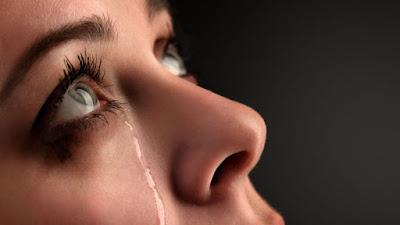
 

Ciò che rende il tango antisociale

Rifiuto, a differenza di paura, tristezza e rabbia sembrano

dolore fisico nelle scansioni cerebrali


Traduzioni:  Rumeno / Tedesco [in attesa]


Sebbene il tango sia chiamato  ballo sociale, troppo spesso alcune milonghe di comunità sono scarsi esempi di comportamento sociale . La soluzione richiede un  facile  cambio di comportamento per quei ballerini nuovi al tango o per coloro che ballano da anni. Quando sento persone che si lamentano delle milonghe asociali o addirittura antisociali, menzionano il carattere delle persone. I problemi di carattere raramente sono il problema.  Il problema è evitare  (comportarsi come se certe persone non esistessero, come se fossero invisibili). L'autore di solito non sa quanto sia dannoso. Per prima cosa, diamo un'occhiata ad alcune ricerche moderne e vediamo perché è così importante non evitare sia coloro che lo fanno sia coloro che vengono evitati:


Questo è il tuo cervello sul rifiuto (o sul dolore)


I neurologi sociali hanno recentemente scoperto che le scansioni cerebrali indicano che  un cervello che soffre di dolore fisico ha lo stesso aspetto del cervello di una persona che è stata rifiutata .   Altre emozioni spiacevoli, come paura, rabbia, ansia o tristezza non sembrano dolore fisico.  I testi stessi del tango si soffermano sul dolore del rifiuto e della perdita. Il rifiuto sociale sembra un dolore nel cervello e diventa insopportabile quando il rifiuto proviene da una persona importante e viene "amplificato" dall'essere evitato da un gruppo, sebbene nessuno in quel gruppo sia davvero vicino. Se l'elusione non necessaria può diminuire nella tua comunità, ci saranno due risultati: meno "dolore" e più piacere.


S hunning funziona bene per stabilire il potere in governi o culture tossiche. Anche la tortura funziona, ma ora che lo sappiamo, chi vorrebbe infliggere dolore a qualcuno? Shunning non ha posto è la danza sociale e danneggia la persona che evita gli altri a lungo termine. La soluzione richiede un po' di raffinatezza psicologica e di comprensione delle tradizioni del tango. 


Questo è il tuo cervello sul rifiuto (o sul dolore).

Il problema non sono quelli che evitano! Né sono quelli che chiedono e poi si sentono evitati. Il problema è l'ignoranza o semplicemente un malinteso sull'etichetta del tango . Ci sono solo tre volte nell'etichetta del tango in cui dovremmo tacere:

  • Mai chiedere un ballo

  • Mai insegnare mosse a un compagno alla milonga , e

  • Mai parlare mentre si balla in una milonga.  

Certo, se qualcuno usa la propria voce per chiedere un ballo, non devi tacere!  Se qualcuno ti sta facendo del male fisicamente, non devi tacere. Puoi dire a qualcuno che balli solo con un accordo silenzioso ( cabeceo/mirada ). Puoi anche dire a qualcuno che vorresti salutarlo anche se non balli. Non si tratta di "insegnare mosse", ma di esprimere come comprendi l'etichetta del tango. La credenza il fatto che non possiamo parlare delle nostre preferenze ci lascia con una scelta molto scarsa: evitare gli altri e fingere che la persona che chiede/insegna/danza-parla non esista affatto. Rifuggire fa male al tuo benessere emotivo, e ora soprattutto perché ora dovresti sapere chiaramente che rifuggire è come infliggere dolore come punizione per la loro ignoranza. Collettivamente, tu e gli altri che evitano questa persona potreste creare (anche se inconsapevolmente) doloroso stress emotivo. Ci sono rari motivi per cui  evitare è appropriato .*


Ecco quattro esempi di incomprensioni del  galateo del tango  e delle loro soluzioni:


I.   "Gli ho chiesto di ballare e mi sono davvero divertito. Ora non mi guarda nemmeno".  Per lo più per ignoranza, le persone chiedono danze. Se gli viene detto di sì, i 15 minuti investiti potrebbero essere molto scomodi per la persona che ha acconsentito al ballo. Il ballerino più esperto ora crede di essere costretto a evitare il richiedente perché qualsiasi sorriso potrebbe portarlo a dover dire di no. Questa incomprensione dei tre esempi di silenzio (sopra) suggeriti in  los códigos de tango  porta il ballerino esperto a credere falsamenteche evitare è "più facile". Non è! Consiglio di memorizzare questo breve copione: "Grazie per averlo chiesto, ma preferisco non ballare con qualcuno quando me lo chiedono". Puoi aggiungere in seguito. "Potremmo eventualmente ballare, ma dobbiamo accettare di ballare con i nostri occhi." Ora, la persona che una volta era ignorante  non è più ignorante!   E il ballerino esperto non ha più paura di sorridere.  Etichetta  del tango La cultura del tango è vista da alcuni come antiquata, ma non dirigere la saggezza dei nostri anziani, in questo caso, porta a evitare. Il tuo tango è una specie di tango o semplicemente tango gentile, tango sociale?


II.  "Ballo da dieci anni ormai, e non voglio davvero ballare con i principianti e le persone che chiedono. Quindi non li guardo nemmeno".    Non ballare con qualcuno non richiede di evitare. Usa la tua capacità di essere socialmente sofisticato per parlarne con loro. Diciamo che qualcuno con cui non ti piace ballare sta chiaramente cercando di ottenere i tuoi occhi. SORRIDI A LORO! E poi distogli lo sguardo! È così facile! La milonga è un  evento sociale  . Ci vuole molta più energia emotiva  per non  sorridere. Alla fine potresti dover parlare con loro del cabeceo/mirada . Illuminali a ciò che vuoi.


III.  "Siamo amici. Quando parlo con lei, spesso alla fine chiedo solo di ballare."   Questo è difficile, ma la soluzione è la stessa. Evita di chiedere o anche solo di provare a ottenere una distanza ravvicinata cabeceo/mirada anche se sei assolutamente certo che vogliano ballare con te. Il tuo potenziale partner vuole davvero ballare con te? Un partner che una volta  amava ballare con te potrebbe non voler più ballare, o non gli piace il modo in cui balli il pugliese, per esempio. Forse più tardi. Forse mai. Quindi non chiedere soprattutto in concomitanza con una bella conversazione. Se combini conversazioni e richieste di ballo, alla fine potresti essere evitato. Se un amico chiede dire: "I principianti stanno guardando; mettiamolo in chiaro   cabeceo/mirada e poi balla." Le eccezioni alla regola alla fine ti andranno male."


IV.  " Ballava con me, e ora perché non mi guarda nemmeno ?"  O peggio:  " Cosa c'è che non va in lui? Non mi ha mai, mai guardato o sorriso? " La cosa divertente è che se incontri le stesse persone fuori dalla milonga potrebbero essere molto socievoli con te. Il motivo per cui ciò accade è che in strada probabilmente non chiederai loro di ballare per strada! :-)   La soluzione: vai dalla persona e dì: "Voglio che tu sappia che non ti chiederò mai di ballare. Mai. Ma quando ti vedo, è bello sorridersi, non credi?" Questo funziona davvero. L'ho detto ad alcune donne che non ballano con me e hanno detto a me oa mia moglie quanto apprezzano avere legami amichevoli con me anche se non balliamo. Va bene per loro. Va bene per me.


Nessun rifiuto significa più piacere, meno dolore. Il tango sociale è puro piacere.


Tango Etiquette for Organizers


Learning etiquette at a Greek restaurant 

If you want to have examples of the etiquette of good tango organizers, go to a traditional Greek restaurant in Europe.

Watch how Greek restaurant owners organize things! In my experience, they go around and make sure that everything is going well.  The same sort of etiquette happens at milongas of all sizes in Argentina--active oversight and supervision of how things are going.

An organizer can make or break a milonga even before the first tanda starts if they are passive and don't consider their crucial role in tango etiquette for organizers. Good preparation includes being excellent communicators to guests and saying what is expected from those who come.  Organizers who have a community of dancers who are untrained by their teachers in the códigos de tango may need to explicitly mention what the expected basic code of conduct is before the milonga starts.  

The concept is simple:  Wise organizers take care of basic needs.  

  • Temperature:  Is it too hot or cold?  Men can take on jackets if they are too cold, but women should not have to look like Eskimos so men can wear T-shirts.
  • Water:  Can people hydrate easily and at a reasonable price (or for free)?  French restaurants by law cannot charge for tap water.  If there is a charge, it should be very little. Hydrate or die.
  • Food:  The best milongas have either some basic goodies out or a bar that serves food for a reasonable price.  That's what hosts do. An early milonga after work, perhaps on Friday, needs something to eat.  Charge extra! We don't need hangry dancers. 
  • Safety (Traffic control):  Wise organizers know dance etiquette (los codigos) and redirect rouge and dangerous dancers. Also, wise organizers create a good traffic flow by having at least four entry points to the dance floor. Milonga traffic control causes less frustration and is where organizers can shine.
  • Sleep:  Paying attention to sleep is a wise business decision.  Starting earlier allows people to travel to your milonga from farther away without reserving a hotel. Organizers who advertise well in advance that the milonga starts earlier and ends earlier are astonished by how their attendance goes up. Also, more organizers are paying attention to a general public understanding of good sleep discipline and the circadian rhythm.  Organizers risk a future "super-spreader event" when many people's immune system is compromised by poor sleep. That's bad business.  
  • The need to communicate:  This basic need is a bit complicated.  It has three parts:  The ability to hear at a milonga, the ability to listen (being silent), and the ability to speak. 
      > Hearing:  Could you imagine if the organizer had a single small speaker at an event and you couldn't hear well? Now, imagine being deaf as a permanent condition because of going deaf early from micro-damage from loud music? Unfortunately, nearly every organizer I know is not taking charge of protecting the hearing of his or her customers.  A good organizer has an app that monitors decibels and requires that DJs do the same.  Dancers eventually will stop coming to milongas if they are deaf or have tinnitus.
      > Listening:  Communicating social etiquette throughout life sometimes means remaining silent more than 50% of the time. That percentage could be 95% at a milonga. Organizers can help at least 70% of listening to happen by insisting on two times to be silent:  First, avoiding conversations while standing right next to the dance floor because people are trying to listen to the music.  Second, it's best to be silent and not talk while dancing at the same time.
      > Speaking:  In tango, we request and accept dances without talking; we don't talk while dancing; polite guests don't talk while standing next to the dance floor.  So, at least for tango, hearing and listening in silence outweigh the need to talk.  Because the main communicator at a milonga is the orchestra!

Those are the basic needs. Additionally, I suggest three issues that are entirely the responsibility of the organizers: 
  • Role-balanced events:  Etiquette in this post has been suggested as a way to be more socially sophisticated and customer-oriented behavior.  Customers want to participate. Marathons and festivals have picked up the importance of role- or gender-balanced events because participation is important for everyone.  This participation balance was what one first saw at encuentros.  But now there is another etiquette issue for small and balanced events . . . .   
  • Private Events need not be advertised:  Encuentros have become very popular; so some encuentro organizers have stopped advertising, making their event a private weekend event. The Newport News encuentro became so popular that Andy made his event by invitation only and did not advertise.  This was good tango organizer etiquette because advertising only makes a lot of people sour about trying to get in when they had just a one-in-a-thousand chance to be accepted. 
  • Wise festival organizers focus on dancers and not stars.  Would a restaurant owner have a group of his friends take over the ambiance of his restaurant?  Nope.  In the same way, tango organizers who are wise would avoid having tables for tango stars or special friends right up front near the dance floor. The organizers who are thoughtful put the stars in the back of the room or give them their own room to get drunk and loud as they tend to see the milongas as an after-work affair. Stars don't need their own table near the dance floor; they hardly dance. 

Organizer Etiquette has nothing to do about "tango police"; etiquette is a natural outcome of being present, mindful, polite, empathic, and as a result, a good business decision. These qualities are only briefly operationalized above. Please add other ideas in the comments or email me at mark.word1@gmail.com if you have trouble making a comment. 

Photo credit:  https://www.thetravel.com/top-rated-restaurants-to-try-in-greece/


Monday, July 14, 2014

Tango-Beat's New address

Please be so kind, and go to www.tango-therapist.blogspot.com.

All blog posts from Tango-Beat in the past are there along with all my new posts starting from February 2012 forwards.

If you are looking for a certain post, you will find it by
using the search machine at the top left of Tango-Therpist


Thanks!
Mark Word mark.word1@gmail.com

Sunday, July 13, 2014

Tango's Archetypal Leader

A continued discussion on leading and following . . .


Archetypal leaders are unique.

In the Jungian sense, the archetypal leader is primal, a single leader whom others emulate. Plato would say the archetypal leader is the "substance of all leaders," and mortal leaders are mere shadows of that substance.

Who is the archetypal leader in tango?  La Música.  In dance classes we talk in very technical, prosaic terms about roles (leader/follower).  The language of art, feeling poetry perhaps must or should put aside in oder to better describe what each person is supposed to do.  We talk about duties of "leadership."   But in trying to be empirical and exact, I believe we have sacrificed the magic, the art and the poetry of tango.  Somehow "leader/follower" become the terms that best describe our magical roles.  I question the poetry of these terms, or even the exactitude of these terms.  If indeed the music is the archetypal one-of-a-kind leader in tango, now we must find appropriate terms for our roles as mortal tango dancers.  Once the music begins, tango's improvisational nature knows no leader but the music, no matter what was said in a class about who leads whom.   La Música speaks with the authority and in her own distinct voice--just as any archetypal leader does. Her voice still dictates (in a very gentle way) every well-taken step to those who are obedient and have attuned their listening skills to understand her unique voice and language.

The Paradox Leadership:  The lead that follows
Although La Música is the archetypal leader on the dance floor, she is obliged to listen to the needs of the human spirit. Her compelling lead will not reach the human heart nor inspire our hearts to dance if she does not listen! La Música, as magical as she is, will fail if she does not listen to the Zeitgeist of our time, the newest generation of listeners, even (through the DJ or musicians) the very moment at hand. But she does indeed listen! And we call her changes for us (the human spirit and Zeitgeist) "musical periods."  Baroque, classical, romantic, impressionist are examples, but in modern times, consider what the "golden eras" or "épocas de oro" mean in the popular music of the last century. The golden era of Jazz, blues, rock, reggae, mambo, and danzón, for example, are the times when these types of music inspired people to dance. During Jazz's golden age, Carnegie Hall was never the host of jazz musicians who did not make it to this great stage without first proving themselves in dance halls. Interestingly, the Hall itself was saved by Jazz musicians, the new voice of the American music Zeitgeist because the Hall was nearly demolished when no symphony orchestra wanted to play there.

La Música's representatives in tango are mostly dead and few living composers. In our times the ability to to have a seánce with mostly dead tango musicians is led by a DJ, and we all know that if the DJ is not listening to the feeling of the crowd, and knowing the music well, the milonga will surely fail from this lack of being La Música's incarnate listener. The representatives and incarnations of La Música, hold a huge responsibility of listening first and then leading the dancers onto the dance floor. If La Música does not lead and follow in a balanced way, slowly milongas around the world eventually will be emptied of dancers.

The implications here is that there are overlapping roles for the couple and music. However, if we must come up with rigid terms, I would call music the only leader. Although those dancing have several leading roles, I prefer to call them both listeners. Consider the terms listener-guide (for the traditional rol masculino) and dual-listener (for the traditional rol feminino), who often has to mediate the argument that the listener guide is having with the Leader. :-)

The object of having different terms is not to destroy a tradition of lead and follow or the attempts of fairness by having inclusive language to describe roles. Tradition and inclusive language are important, but not as noble as the goal is to describe roles that more fairly describe both partner roles in a way that is more exact.

Beginners have enough of a learning challenge than to give them the idea that one has to lead and the other follow. That learning construct is a damaging message to beginners! One role is overburdened with guiding while still being a blind beginner, and the other is overburdened with listening to timid or contradictory body language of the so-called "leader" and not to the music. Some veteran tangueras I know are still very much over-listening to me, and dance behind the beat because of it.  I am absolutely sure that this is the problem of over-listening.  At practicas, I have asked women hundreds of times to experiment with the idea of focusing only on the music and attempting not to listen to my body--just the music.  Voilà!  All of a sudden my partners start dancing on the beat and doing things that lead me to new vistas.  My theory is that they are finally listening to the Archetypal leader more closely.  And isn't she so cool!  I like listening to her as the only leader too.  Join me?

As a dance-floor navigator, I am the listener-guide, will you be my dual-listener*?  For short, I just drop the first word of listener-guide and dual-listener, and we become the "guide" and "listener." We are both listeners, yes, but with different roles.  From comments and discussions, I have come to like these terms, but the dialogue is open.  We still have a many centuries of discussion left.  It took 17 centuries for the Catholic Church to reject many poorly translated terms from the original languages into Latin.  Let's not wait that long!  I don't have 17 centuries to wait fro a good translation.  Yo tengo prisa.   ¡Favor de acompañarme adelante con términos exactos!

Leave a comment with your ideas of other alternative and more exact translations from Spanish for lead/follow! (Please not a word, about how much you love the terms lead and follow, okay?  This is a "Protestant" discussion forum for heretics only.)


*The Dual-Listener is an ambassador or mediator between the Leader (La Música) and the guide.  However, if the listener-guide is NOT arguing with the Archetypal Leader, then the dual-listener has the very pleasant job of just being present in a wonderful embrace, dancing and listening to the music, rather than attempting to stop a war. 


Tuesday, July 8, 2014

La Música dirije, seis tocan

   Link to Tango-Therapist (new location of this blog)                            English version 


Siento nuestros pechos, que se llenan del aire
Como si fuera el aliento vivo, un dúo de Bandoneones.


La Música Dirije, Seis Tocan 

El bandoneonista toca con tanta pasión,
Me pregunto si en el éxtasis o el dolor.
 Él y el guitarrista,
     la violinista,
        el pianista
           y nosotros, dos bailarines, somos un sexteto.
Tocamos sobre el piso pequeño de la cantina
En nuestro trance hipnótico colectiva, cuatro más dos,
Juntos damos vida a los puntitos de tinta en el papel
De un compositor que lloró al oírlo la primera vez
Su tango pintado en el aire, que nos mueve ahora a bailar.
La Música había forzado su mano para escribir.
Ahora él ve a su arte rozar con el arco del violín.
Llora el compositor mientras el pianista martilla la forma
De un tango sobre el Yunque del Muse de Harmonía.
La Música se calienta el acero del fuego de la emoción -
Pasión, avivó el fuelle del bandoneón,
Y trajo a la vida por nuestro sexteto, nosotros seis.
Mi tanguera y yo esculpimos un tango visual,
Un baile dirigido por la Música misma.

La Música dirije, seis tocan

Sentimos la presencia músicos y cómo nos conducimos,
Ellos nos admiran -- su obra del arte, moviendo y respirando.
Como miles antes que nosotros, que representamos a unirse
Los hombres y mujeres ante nosotros y escultura
Como co-colaboradores, oyentes, seguidores de La Voz.
Nos reunimos en momentos secretos privados - dos en una multitud -
Contiene toda la pasión de cada mujer y hombre
Que se han celebrado entre sí desde el principio del mundo.
Estas son las papeles de mujer y hombre que nosotros no escogimos;
Nuestros papeles de abrazo nos eligieron.

Ella me abraza y me permite su espacio,
Siento el ritmo de su corazón.
Nuestros oídos escuchan la misma voz,
Cada movimiento que percibimos a través de
Nuestros dedos, los brazos y los hombros.
Su cálido pecho contra el mío me guía.
Todo nuestro ser se funde en conjunto,
Nuestros auras divinas y terrenales entrelazados.
Siento nuestros pechos, que se llenan del aire
Como si fuera el aliento vivo, un dúo de Bandoneones.

Nos unimos, nosotros seis,
Para comenzar una nueva línea melódica,
Una nueva frase musical con su propia historia.
Su postura me permite tomar un paso
En un camino que nunca he estado.
Empujo hacia delante y su cuerpo me dice
Que ella está presente, cuerpo, alma, espíritu.
Su embrazo dice:
"¡Despacio, que te disfrutes de este momento!"
Liderados por la música, nos unimos al ritmo africano
Que el guitarrista rasguea en nuestros corazones.
Mi compañera guía a un nuevo camino,
Nuevas formas de ser y de sentir,
Mudarse a viejos sonidos, que nunca antes he escuchado.

La Música nos detiene en su forma familiar
Después de una ráfaga de notas de la Variación.
Ella y yo estamos en silencio,
Su pierna entrelazada con la mía,
Como si no me dejara escapar tan rápido,
Ella nos detiene por unos momentos más como uno,
Equilibrado y fuerte -
Una escultura en movimiento ya no se mueve--

Un monumento al momento.


La miro y silenciosamente asiento con la cabeza.
No tengo palabras.
Pero sé una cosa:
Nunca voy a llamar a una tanguera,
"La-que-sigue" de nuevo.
Escuchamos la voz de Música juntos.
Nos convertimos en uno con la orquesta.
Nos convertimos en "la seis-que-escuchamos."
Nosotros, el baile de dos que-escuchan,
Nos convertimos en La Música hecha carne,
Sobre una tierra en la necesidad de su mensaje.


Saturday, June 9, 2012

Redirection to new address

Because the former name "TangoBeat" belongs to a New York City firm, I am redirecting you to my blog's new name.  Please read the two-step instructions:

1.  Click on the new name here -->  "Tango-Therapist."  

2.  When you are at the new web address, in order to find the exact article for which you were searching, put in the title or key words into the search engine space above left.  (Here is a picture of the search engine you will see, top left of every page on this blog):
Now, put in key words in the upper left box
for the article you wish to read.


Sunday, April 1, 2012

Trade-Mark TangoBeat from NYC

Update:  8 July 2014

My new address is www.tango-therapist.blogspot.com.

An owner of a now-defunct NYC company threatened lawsuits if I continued using the name we were both using at first.   I write without commercials, without selling classes or my service. 

You may no longer be able to find this NYC company.  If you were looking for TangoBeat from NYC, please visit them if you can find them. They are at TangoBeat(TM).

However, if you are searching for the tango blog that focuses on musicality and the psychology of tango, my blog now has a new name with all the old articles:  The Tango-Therapist:   http://tango-therapist.blogspot.de/  If you are looking for a particular article from my old web site, please put the name of the article in the top left search machine and it will take you there.  A list of the most popular posts are below at the bottom of this post.

Here are a few of the most popular articles now at my new blog address:

Tango Etiquette (a permanent page on the right column of blog).
Being Great:  In your dreams, Tanguero
Follower:  A job without promotion (a new revision April 2012)
Good Tango Karma
Tango and the Music of the Spheres

If the Cello could play the Violin


Thursday, March 8, 2012

Please Visit New Address!

My new blog address is:

Tango-Therapist.blogspot.com 


Please visit me there.  All the content from Tango-Beat is still there, but in deference to a company with a similar name (Tangobeat.com), I have changed the name of my blog.  Please visit them too -- a great resource but with a very different mission.


--  Thanks!

Thursday, February 23, 2012

Tango-Beat Blog's Last Entry


Tango-Beat, my blog, has a new name.

Since 2009 I have been writing a blog, which I thought would be more about music and especially rhythms of tango. Sure, I have written on this, but rarely. It is time for a change, especially because a company called Tango Beat has full rights to that name.

The new name of my blog is:
 www.tango-therapist.blogspot.com.

I have a new entry there already, called the Essence of Tango, because as I was moving over my blog to the new name, it was a draft I accidentally published.

PS.  If you read the comments, my blog was nearly named "Tango Iconoclast."  However, I decided on "Tango Therapist" over "Tango Iconoclast." because I am perhaps the opposite of this.  As a few people have pointed out, I am not up to the task of being an iconoclast.  That's hard work!  And much of what I promulgate is a return to traditional tango because of its therapeutic effect in contrast to an every-increasing love of show-tango and tango-as-tourism.  I promote the ideat ideat that a man and a woman taking full responsibility for being present in a dance.  This notion is not iconoclastic but the return to the sacred icon that has been shattered by the same producers (or mentality) that is behind "Dancing with the Stars."

Saturday, February 11, 2012

Milonga Lisa


My Milonga Lisa*


The music is fast.
I don't push her to take the next step.
The music drives her to do that!
The music leads --
No, it drives us a la vez.
But she stops when my body signals
The music's moment of pause.
A new phrase takes us back to tempo.

At end we stop and laugh
Like children who've jumped
From a swing to roll on the lawn.
We smile as we lie on the grass.
The music starts; no time to talk!
We run back to swing yet again
To the divine voice of La Música.
My milonguera sits in the Louvre of my mind,
The coy woman who has returned my nod.
She is my Milonga Lisa.


*From Wikipedia: "'Milonga Lisa' [means 'Simple Milonga'], in which
the dancer steps on every beat of the music; and "Milonga con
Traspié," in which the dancer uses Traspiés or contrapasos (changes of
weight from one foot to the other and back again in double time or
three steps in two beats) to interpret the music. Thus, dynamics may
be danced without having to run fast or without the use of much space.

Sunday, January 22, 2012

When a tanguera closes her eyes


Navi went with me to every milonga in the Washington, DC.  She told me how to get there, and she never got upset with me if I missed the turn she told me to take.  Sure, she would just roll her eyes and say, “rerouting,” and she’d come up with a route that would fix my mistake.  Sometimes she would say, “At the first possible moment, make a legal U-turn.”  She was delighted when I made a “creative” U-turn because we were back on track.  Then in December, I asked her to close her eyes, and as a surprise I sent her off on a cruise to Germany.  She was totally surprised that she woke up in a whole new world.  She only could tell me longitude and latitude of where I was.   Her whole reason for being is know where she is and to help orient me.  But once awake she didn't know where she was! 


Navi was really upset with me.  She was hyperventilating, but I did my best to speak slowly and in a low, soft voice, which calmed her down.  I told Navi that I would soon get a new CD of German maps.  "Navi, you are smart," I said.  Soon you will memorize all the new maps."  I assured her too that she can take me to all my milongas again.

What seemed to please her most was that I told her that she now knows what it is like to be a tanguera!  “When a tanguera really likes the way I dance," I told her, "She closes her eyes and she is totally surprised when she opens her eyes and she is in a place she did not expect.  Then I know that I have done a good job of letting her be 100% a women but at the same time let her embody the music so deeply that she forgets that she is mortal for 15 minutes.”  Navi thought about that.  She didn’t say anything, but I knew that she liked the idea of being my tanguera.  She no longer was upset with me.

Now, I have another problem.  When I put in the new GPS CD into her memory, she told me in an especially sexy voice as we had arrived at a milonga in Heidelberg something that haunts me.  She never addresses me personally, but in Heidelberg in the shadow of the city castle she did: “Mark, I don’t want to wait for you in the car this time.  Can you take me in?  I want to be your tanguera.  I want you to hold me in your arms and I will close my eyes the way you told me the tangueras do.  I would sometimes just forget where I am."

Even my psychiatrist (a tanguera) doesn’t believe me that my navigation system is jealous.  I am worried.  Will Navi stop taking me to the milongas?  Will she take me somewhere, getting me lost forever?   Navi and I have become close, but what can I tell her?  I cannot tell yer, "You are a navigation system, you cannot be my tanguera!"

Being a tanguero seems to get more complicated the longer I dance.  


Monday, January 16, 2012

Music Workshop: Tango and its African Roots

Preface to the Post:   This article is on musicianship for tango dancers, and may not be easy reading.  My poetry and prose on the psychology of tango are usually easy reading; so please don't give up on me because of a few posts on musicianship!  However, I feel that if you take the time, that it will open your mind to the very roots of tango.  And there are elements of psychology/sociology to this post in that many have devalued tango's roots via a lack of psychological insight.  Maybe it is slow reading, but I hope this discussion will open up your appreciation of why tango moves your heart and your body to move when the now-dead tango musicians begin to play.  Pour yourself some coffee and read slowly, and forgive me if I lose you for a few moments.  If that happens, stay with me.  Get a general picture of the origins of tango and that will open you up to much more later.  I have four videos to share -- it's show and tell:  Not hard at all!

Let's start off inductively by seeing and feeling:  Listen to this folk music (zamba argentina) with dancers very much not in folk costumes!  The music is in 6/8 (very much like the feel of 6 in tango's vals).  Sometimes you will see the dancers feet dancing on the pulse like vals (1**4**/1**4**:||) but often when they are going faster they will dance variations off of tango's most important rhythm (1*3*5*/1*3*5*:||).  More on this rhythm later, but it is the center of what I want to convey to you as being very important in tango's most primal rhythmic expression.


Here is the more traditional not-in-high-heels zamba argentina and you can see the footwork I mentioned above:


Although the majority of musicians and dancers have a love affair with the melodic, harmonic and instrumental influences of Europe, the fact is that tango would be nothing without its heart -- its rhythm from Africa.

Our Lack of Psychological Insight:
I see this huge silence about Africa as a typical devaluation of Africa.  Nothing is new about European influence on misunderstanding the value of Africa and its inhabitants.  Without devaluing Africa, the European slave trade would not have been possible.  Are we all educated and now we are over this devaluation?  Well, let me ask it this way:  Is the Civil Rights struggle over?  Latin America is particularly blind to its own racism, so please don't turn to people from South America for their opinion to find "openness" -- their devaluation of tango's influence is particularly "European" and denied in spite of many glaring facts.  Argentina prides itself on being the "most European" Latin American country, especially being the only Latin American country with so few people of African heritage (less than 3%).  So I would fully agree that indeed, Argentina is the "most European," which may include some the less positive things that Europe has imported to the Americas -- its ongoing ignorance and value of Africa's influence.

Surely you have heard the term"Afro-Cuban music"!  Have you ever heard of "Afro-Argentine" music?

Sorry, that was a trick question.  Of course you have heard Afro-Argentine music.  Not only have you heard Afro-Argentine music, you dance to it at every milonga and in every traditional tanda.   [Please visit the link on the term "Afro-Argentine" here].

I wrote an earlier musical workshop article on thinking in six.  The post was on the vals and I even used Baroque dance to show how the vals is really in six.  However, as I wrote that post, only then I remembered about my earlier discoveries as a Latin percussionist:  Most well-known Latin American music (son, mambo, salsa, merengue, samba, bossa nova, cha-cha-chá to name a few) came out of the sacred 6/8 rythyms of Africa.

Let me give you the most important example, the 6/8 rhythm that created salsa, mambo, son, merengue, cha-cha-chá, cumbia and others.  They all first started like this in 6/8:  1*3*5*/*2*4**:||  This part of my show-and-tell story needs you to clap!  If you start out slow and then eventually get it up to tempo, you will find yourself miraculously clapping out the most popular clave-rhythm in all Latin American music, which is also miraculously NOT in 6/8.  The first time I did this I was dumbfounded!

The preceding rhythm is today called the "son clave" (from the Cuban music called "son," a slower version of mambo).  The word "clave" comes from the word for wooden dowels (claves or "nails") slaves used to play the rhythms of their homeland.  The dowels held together the crates the slave dock workers unloaded from European ships.  Later, during and after the chaos of the Haitian's war against the French colonists, some slaves escaped to Cuba taking their clave rhythms with them as their only baggage.  In Cuba, then, we really do not have "Afro-Cuban" music.  Really, the black Haitians musical inventions in the new world was Afro-French to be fair to Europe's important influence with their music in Cuba.

Again the rhythm above was in 6/8 as:  1*3*5*/*2*4** :|| which is often reversed to *2*4**/1*3*5* :||  This reversed clave-rhythm will have to be a later discussion because it is the most important development of the most dancable music in tango's Golden Era.  (I hope that perks up your interest for a later post).

Tango has only the first part of the rhythm above, which gives tango the drive that it has:

6/8:   1*3*5*/1*3*5* :||

When you put this rhythm into straight time it turns into something close to the original as 3/3/2 (1**/4**/7*).  Especially in tango nuevo, one hears the 1, 4 and 7.  What gringos often don't hear in most Latin American rhythms is that the "clave" rhythm never goes away.  In fact it is omnipresent and responsible for the melody along with what is being played for syncopation around this rhythm.  If you don't hear it, I believe that you feel it and it is what drives you to love tango.  I have heard tango musicians and teachers talking about syncopations that show up in the music, but they are not aware of the underlying rhythm that has generated these syncopations.

What I hope to demonstrate here is that this feeling of 6/8 is actually behind the pulse (heart) of tango.  So how is it that vals, which is essentially in 6, is "European" as so many claim?  If you wish to get at the primal tango, listen to tango´s "vals cruzado"!  The vals often explicitly expresses the 1*3*5*/1*3*5*:|| of the original tango rhythm from Africa.   I have been saddened to experience in my discussions with some tango musicians and vocalists that the majority see the vals as hardly being tango at all but "European."  This is simply ignorance of the facts.  I more recently have come to see that the vals is more primal and directly connected to tango than any other expression of tango.  The "cruzado" of the vals cruzado is the crossing rhythm of a vals within a vals.  Nothing is further from the truth that the vals is "kind of like a Viennese waltz," as I have heard musicians claim.  To me this is just another devaluation of the African link.  Being aware of this rhythm makes my vals.  So far, I have not heard any complaints.  Instead, I experience some some huge smiles and laughter from the pure joy that the cruzado brings to the dance.  The steps seen in the zamba above (1*3*5*) are applied to what the musicians are doing in the vals, and it has a feeling of flying.

Let me give you another example, this time from Gotan Project.  This piece (below) is also in six.  The key to it goes back to our primal rhythm of 1*3*5* :||   But this time they ingeniously slow things down and drop the 3 on the first measure and the 5 on the second measure.  So here is how it looks:  1***5*/1*3*** :||  Practice clapping that rhythm very slowly and then you can clap it to Gotan Project below.  I promise it will be fun, and get you back to your African roots.


I started this blog idea from a question of my conocido, Andreas, in Germany.  He heard the above music as being divided into two measures of 4/4 + 2/4.  His question gave me the idea of showing how important 6/8 is to most Latin music.  Did I say Latin?  Much of jazz, fusion, funk, soul and rock take from this rhythm.  The clearest examples of this rhythm in today's music is hip hop and regetón, which have this 6/8 rhythm of  |1*3*5*:|| as their base).  The later two types of music may have come dircetly from modern Angola's popular and very-much-analogous to tango music and dance, called kizomba.

Warning label on the kizomba video clip below:  Tanger@s who love nuevo may never want to dance tango again after seeing this dance from Angola.  Second warning:  Do not let your children see this next demo unless they are over 21.

If you hear hip hop in the background, maybe you will also notice the same slower milonga rhythm.  Nothing is new under the sun.  Here we have the old African roots, now (or still) being danced like condombe/tango and with the same rhythm. Interesting. ¿No?


For those who see this as a mix of sensual Latin and tango dances combined, do not forget where kizomba  comes from:   Africa.  The heart of our tango, and the Afro-Argintine music that forces you to get up and dance.

Finally, ask yourself why you feel impelled to dance when tango plays?  Is that the European influence or the African that does that?  I really cannot answer that question for you, but for me, it is NOT the European influence.

PS:
My next blog will be on the great dancing and people I have met in Germany.  Thanks for sticking with me.

Saturday, December 24, 2011

When a Tanguero Falls in Love


The Harbor

When I discovered the harbor of your heart,
It was after a long voyage from across the ocean,
I did not know I was even getting close to discovering you
Until I first spotted gulls that guided me
To the continent of your character.

I saw your smile, a waterfall on your coastline,
And the sound of its soothing power
Was the first time I heard your voice.
On I sailed and I saw the curves of your mountains,
The flowing rivers of your long hair.

Suddenly a breath-robbing view overtook me –
Your harbor, your heart.
I felt immediately safe there.
I could see your harbor had no hidden shoals,
No murky waters and unknown dangers.

Your harbor is clear.
I can see to the bottom.
I am hypnotized by the playfulness
Of the dolphins that play in the waters of your soul.
I see that they are your youthful spontaneity.

Your harbor lulls me with waves of hope.
Your harbor is my place of refuge,
A weary vagabond sailor on a ship,
Once a captain, but now alone, afloat,
With tattered sails and no crew.


When I discovered the harbor of you heart,
I watched in wonder, and then impulsively,
I dove into the waters of your soul,
And played with the dolphins.
I was not a Cortez who came to conquer a continent.

Your continent, waterfalls, terrain, rivers, clear waters –
And especially your harbor – conquered me.


Saturday, December 10, 2011

Returning from War in my Tango Uniform

The following story is fiction with a high percentage of truth.  Find what seems to be true to you. This is a story about finding liberation from jealousy and possessiveness.  (I originally wrote this in 2009 while living near Ft. Hood, Texas).


It wasn't the prettiest tree,
but we guarded it well
The hardest thing for me to be deployed was not getting shot at. Having near-miss IED explosions that dazed me were horrifying too, but the hardest thing was to be away from my fiancé. I wanted to believe that she was being faithful, but there were so many stories of women cheating on their men. “Teresa was different,” I would tell myself. “She has true class and culture. She wouldn't do that.” But over and over we would hear about affairs that were being firmly denied, and the facts came in that were undeniable. Although it was against regulations, we even had access at S-2 to use satellites to go look at our homes. I had heard stories of guys who could see the pickup trucks parked out in front of our homes, and later the denials over the phone. Soldiers went home for two weeks of home leave, and they had their stories too. Infidelity was our obsession.

Although it was against regulations, Specialist Gaffney in the S-2 shop went and took real-time photos of everyone's home near Fort Hood.  He was in our platoon, and decided to do us all a favor.  One evening he handed out "pictures of home" to everyone in the platoon.  I told him that he could be busted to private for that.  "The intelligence satellites are to keep us alive from deadly threats, not to see who is sitting on your porch at home, Specialist!"  But then, I couldn't help but look at the photo.  Teresa's car was there.  No pickup truck in sight.  I didn't bust Gaffney to private, but he had extra duty and a counseling statement.  If the captain had known about it, he would have had an Article 15 and lost rank for sure.  I was easy on him because he just was being stupid and wanted to help everyone in his own 19-year old way.  


The winter sun on Teresa's car near Fort Hood made
 it look like a pickup truck at first glance. 


Since learning tango with Teresa, my fiancé, I noticed the word "tango" being said all the time in Iraq.  In the military if you are spelling something out on the radio or even in person, you don't say "t" but "tango."  Also, everyday I would hear someone saying “Tango Uniform” for this or that, meaning "broken."  For example, over the radio, we would hear that a vehicle had broken down and was irreparable: “Call out the wrecker, it’s Tango Uniform.” In reality “Tango Uniform” means "T.U." for “tits up” (that is, flat on your back).  Radios, vehicles, even relationships were "Tango Uniform" -- ruined by infidelity or some other thing.  The first sergeant even said at chow, “My marriage is Tango Uniform."   I would have thought that the young marriages would be the most fragile, but officers and senior enlisted soldiers had the highest statistics for relationship casualties.  The rear detachment commander had checked the First Sergeant's fears of fidelity.  At chow Top lowered his head and told me, "Yeah, she's cheating on me.  My kids even know the guy, and he’s sleeping in my bed.” He told me that he didn't want to go back because he was afraid he’d kill them both, leaving his children without parents – one dead and one in prison.  I felt sorry for Top because he would never confide in the chaplain or -- God forbid -- go to the behavioral health tent.  He'd just suffer on his own, and maybe he'd join the other soldiers on the growing list of soldiers at Fort Hood who had consummated their deep pain with a murder/suicide.  I didn't let my mind wonder about this.  I couldn't report the top NCO for pondering murdering his wife, but if it happened, I knew that I would never be able to get that out of my mind.


Instead, I preferred to think about good reunions.  I preferred to imagine having Teresa in my arms again.  Before I left for Iraq, Teresa and I had taken some dance classes and we loved it. First we loved salsa the most. But then we discovered Argentine tango.  We were getting pretty good at it before I left.  To keep me up on my tango, Teresa has been sending me videos of “tangueros” dancing, and I even practiced by myself whenever I had a moment by myself. I loved to watch, but again, the atmosphere of distrust made it very hard for me not to feel jealous and wonder if some sultry tanguero was slipping off with her after a dance. I wondered if she were happily “Tango Uniform” with him in bed and that our engagement also might be sadly "Tango Uniform."


Next to my cot, I always had a stack of her letters that always started, “Dearest Tanguero Adorable…”  She often wrote about being true to me.  She affirmed her maturity, her own self-worth and of course, our love. I hated that I still had my doubts. But I did.  The negative thoughts would come to me and whisper, “A lot of women were saying this, and they were off doing the wild thing.”  But one thing she said really made me believe her. She told me over a crackling long distance conversation, “Sweetheart, you know, if a lot of these women had a way of getting their need for touch met, then they might find it easier to be faithful. Tango allows people to get an important need met—the need to be touched. And if they had any sense of culture and self-discipline they would feel no need to go beyond that.” That sounded genuine. I also was able to dance a few times and feel what Teresa was talking about. There was dancing at a large FOB not far from our sector in Baghdad, and they had salsa dancing there. I found myself feeling so much better after that dance, and even more committed to Teresa.  The magic of music, dance and human touch fulfilled me.  I didn't have to go beyond that.


This is where the driver should
maneuver with "back ochos."
Close to the end of our deployment after I came back from a mission with my platoon, the commander was standing there, and I thought there was bad news. We all fear last minute tragedies in theater or back at home at the last minute before returning.  It seems like shit happens all the time at the very last minute of a deployment.  We were supposed to come home on the 10th of January, and we didn’t have much time left in country. As I had suspected, the commander had bad news.  “The XO's team just missed running over an an IED, and he’s being MEDEVAC’d to the hospital in Baghdad.  He’s doing okay -- nothing really serious, but that means that you’re going back early as the rear-Detachment commander instead of the XO,” he told me. That meant that I’d lead the forward party to help prepare for the return of soldiers back home at Fort Hood. 


My emotions were properly dampened as the commander told me.  First of all, the XO and I were close friends.  We were in the officers' basic course together; so this was terrible news, but at the same time I knew that I would be home for Christmas.  It is probably impossible for most people to understand that this actually 99% bad news that I would be home for Christmas.  I felt like a traitor to my platoon, getting to go back early. I felt humiliated telling the soldiers under me, and all the while I was so happy to be leaving that hell hole and see Teresa. I was totally conflicted in my feelings.  But if I had been given the chance I would have stayed.  Like it or not, I was going back in time for Christmas.  I also decided that I would not tell my family or even Teresa.  I felt sort of ashamed that I was coming back. I was also dreading my return to my fear of what I might find remaining of my hope of marrying Teresa.


What would I find? Intellectually, I knew that everything would be okay, but I had these great fears in my gut too -- fears that seemed deeper in my gut than the the dangers of going "outside the wire" on a mission.


When I arrived I had to go through lots of briefings and medical screens like everyone else would have to do in January. But on Christmas Eve, I would be free. I knew where Teresa would be from our conversations -- at a Christmas Eve tango party. So I put on my dress blue uniform – the only thing I had at my locker at work. I drove down to the University of Texas in Austin.  The UT Ball Room was down I-35, sixty-something miles from Fort Hood, where the milonga was being held. I put on an overcoat so as not to cause a scene when people saw me in uniform at the dance. 


It took a while for me to spot Teresa. She was dancing with a handsome man, and I felt my face turning red. I stood in the back, and no one seemed to even notice me. I realized that I was spying on her like Specialist Gaffney's eagle-eye from through the stratosphere.  I knew it was wrong for spying, and I deserved extra duty like I had given Gaffney.  Also, I felt this mad jealousy well up in me because they were chest to chest, and he danced so well. She looked so satisfied in his arms. I had a feeling of great sadness at first: Like a little boy who was watching his best friend run off with someone else. Then I fought back the rage and jealousy. I tried to stay in the shadows of a far corner but I was sure that my red hot face would surely alert everyone that I was there.  Certainly someone would ask, "What's burning!"  The striped sides of my dress blue uniform pants surely would give me away if I tried to escape now as the tanda ended.
  

As people were leaving the dance floor, I spotted Teresa coming my way. My stomach twisted and my hands were sweaty. 


An older gentleman stopped her with a nod of his head. Another song started and they danced. She had not recognized me. The man was old enough to be her father. Wow, he was good. He made the younger man look like a klutz. Although they danced simply, people stopped to watch them.  Teresa and he looked as if the music controlled them, forcing them to dance so wonderfully. Teresa looked like she were in some sort of tango Nirvana, and I realized that it was the music, the touch, the moment that was filling her soul. I felt this … this … huge well-spring of emotion, of love, of trust.  She wasn't in heaven because of that old man but because of the power of the embrace, the music and joy of movement, just as she had said before.


As if I did not even choose to, I felt my overcoat fall to the floor around my feet. People were leaving the dance floor, and someone said, “Teresa! My God, he’s back!” 


Teresa's tanguera friend was pointing with one hand and the other was over her mouth, realizing how loud she had said it. The room went dead silent. Everyone started clapping, and Teresa came running to me, with a crowd behind her. She melted into my arms. She was crying. Others stood by and gave me hugs like I was their long lost friend. “Thank God you’re back. Teresa has told us so much about you; it’s as if we have known you forever,” an older woman told me, holding onto my hand like my mother would.

This is the tango community: A bunch of people who touch each other as if this were what human beings do best. 

The music started again, and she led me out onto the floor.  I felt so self-conscious at first.  It was like a wedding dance and we were the only ones on the dance floor.

I just tried to do what I had seen the older man doing, listening to the music and letting the music move my feet. I danced simply, but it felt like I was on a level that I had never had experienced. It was the embrace, Teresa melting into my soul.


My engagement and my love for her were all saved from my worries of catastrophe and hurt at that moment. 


Now when there is a military event, Teresa does no longer calls my uniform my "Dress Blues"; she calls them my "Tango Uniform" because of our reunion dance in Austin.   


I am reluctant to tell her what "Tango Uniform" really means.


Post Script:
This story is of course fiction, but so true about soldiers, love, trust and what tango has to offer the world.


Photo credits:
Link to IED explosion is here.
Older gentleman photo:  Visit  
http://practimilonguero.wordpress.com/page/4/
The photo of Salado, TX was from Google Earth.
All photos with the "tango uniform":  Izabella Tabarovsky, Washington DC


Photo models:
Dina Dalipagic and some unknown tanguero in uniform.

Note:  The "Tango Therapist" now resides in Germany.  He is father of two sons who live in Germany.  Besides being a lover of Argenitine tango and a tango blog writer, he is a therapist for post traumatic stress disorder (PTSD) and family problems (now in Germany) and is a lieutenant colonel in the US Army Reserves, Medical Service Corps.

Ciò che rende il tango antisociale

  Ciò che rende il tango antisociale Rifiuto, a differenza di paura, tristezza e rabbia sembrano dolore fisico nelle scansioni cerebrali Tra...